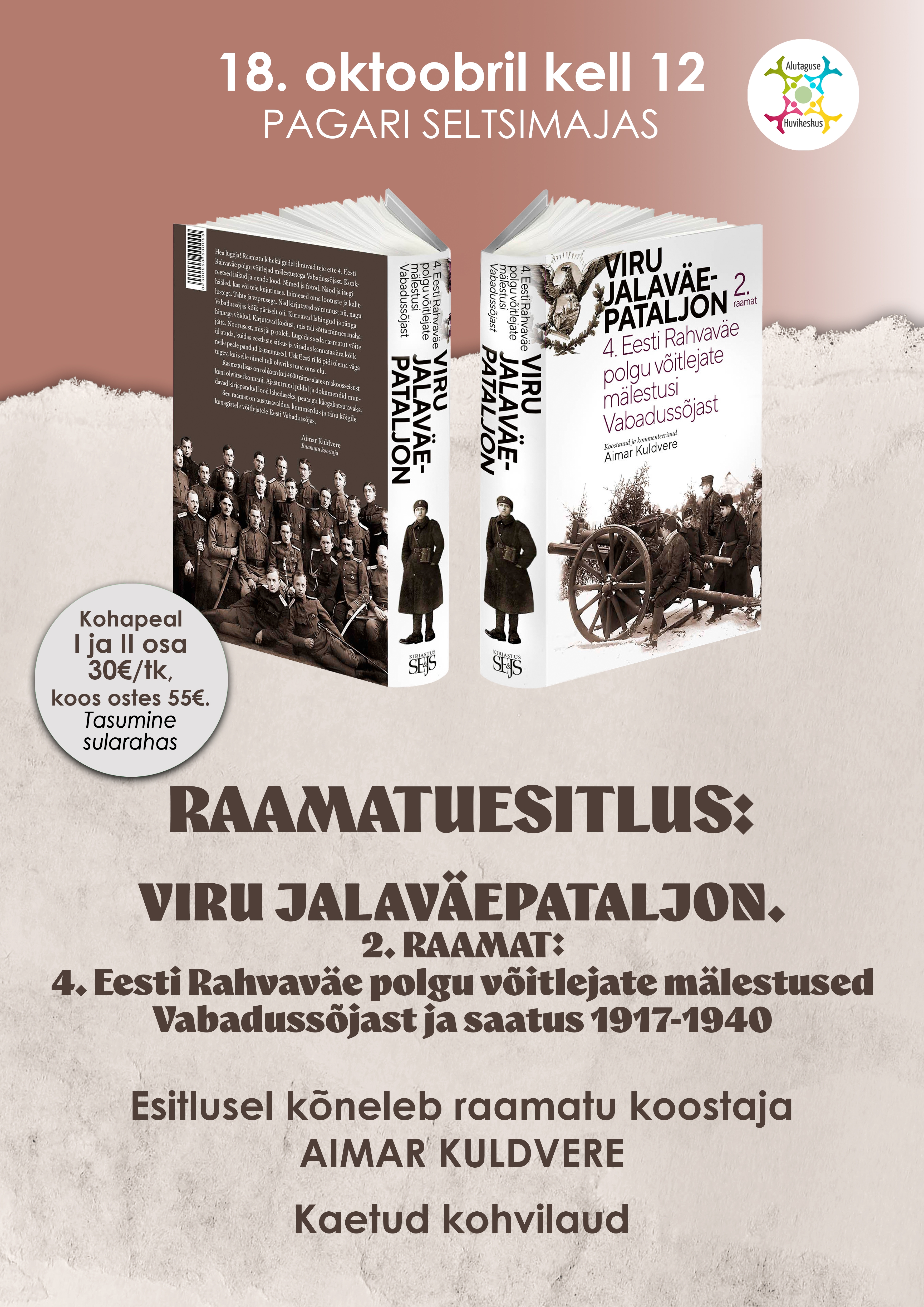
Between the covers of this book are the memories of the fighters of the 4th Estonian National Army Regiment from the War of Independence and their fate 1917–1940".
Aimar Kuldvere, author of the book, will speak at the presentation. The book is a sequel to the work "Viru Infantry Battalion. From the 4th Estonian National Army Regiment to the 4th Single Infantry Battalion 1917-1940" published by him in 2019.
Both parts I and II can be purchased on site at the price of €30/piece, €55 when purchased together. Payment in cash.
Example from the book:
The autumn road is slippery and muddy, and the foot seems to tend to go back to the direction I came from. In the fog of the autumn morning and in the quiet gust of wind, I can only hear the squealing of the barnacles and the branches of the trees howling after me as if to leave me alone. As soon as the last audible sound is left behind, I trudge alone on an open field road with my peacock to the far unknown "to protect our small land and people.
From the memories of Private August Pagar.
Part 2 of "Viru Infantry Battalion" is not an ordinary history book. The 632-page collection contains the handwritten memories of 26 men who fought in the 4th Infantry Regiment in the War of Independence. When the Red Army attacked the young Republic in Narva in the early morning of November 28, 1918, this regiment was the first to go into battle. In the book you will find the names and biographies of the fighters of that time.
The War of Independence is the most important event in the history of Estonia in the 20th century. Thanks to the victory in the War of Independence, the young Estonian state survived. Thanks to the spirit of the War of Independence, we live in a free country today. The celebratory speeches talk about the spirit of the War of Independence. You can get an idea of what it is by reading the book.
In the final part of the volume, the consolidated lists (nearly 4800 names) of those who fought in the 4th Estonian National Guard Regiment in the War of Independence, from rank and file to officers, have been published. This is a list of the new life of memories. Because you never know, maybe you too will find the name of your distant ancestor or relative there.
The work contains nearly 200 historical photos and 542 references. In addition to the history of war, they also talk about the Estonian home of the time, the Estonian outlook and traditions.
The successor of the 4th Estonian National Army regiment is the Viru infantry battalion located in Jõhvi today.